Most people hang a window bird feeder, get three house finches on day one, and quit in February when the seed in the tray has turned to mush. The setup is not the hard part. Placement is, and so is cleaning, and those two things decide whether a window bird feeder becomes the best seat in the house or a cloudy plastic tray you stop looking at.
I have run a window feeder three feet from my dining room glass for twelve years, which is the distance that prevents window strikes. A white-throated sparrow hit that same glass before the feeder existed, spent three days in a shoebox, and taught me more about placement than any product page ever has. What follows is the routine I use now: where to mount it, what goes in it, and how to keep it clean enough that it is not a disease vector with a perch.
Why you should trust me
I am a licensed wildlife rehabilitator in Madison, Wisconsin. I run the songbird side of a county wildlife rescue out of my garage, I work part-time at a small animal clinic, and I have been feeding backyard birds for twelve years. Ten of those years are in the log, a spreadsheet where every species that visits gets a row, along with first-of-season dates and how many cups of seed each feeder draws per week. My county life list sits at 214 species, and 38 of them have hit my feeders.
The log decides my recommendations, not the product photos. It is also why I care about two numbers more than anything printed on a box: how fast a feeder empties, and how long it takes to take apart and clean. Birds do not care about a powder-coated finish. House finch eye disease and salmonella do not care either, and every case I have seen come through rehab traced back to a feeder nobody had taken apart since fall.
How I picked and how I tested
Two items, one job: get birds onto the glass and keep the seed dry enough to eat. Nothing here gets recommended without at least one full season in my yard and an entry in the log.
For a window feeder, my test runs in this order. Does it hold seed without dumping it when the window rattles in a storm? Can I get the tray off and into the kitchen sink in under a minute, because a feeder that is a chore to clean becomes a mold experiment by August? Does it survive a Wisconsin February, which means freeze, thaw, freeze, and ice in places you cannot see? And does it put birds close enough that I can read a leg band without lifting binoculars?
For seed, I read the panel on the bag before I buy it, and I look at what the tray holds after a week of rain. Filler like milo and red millet sits in the tray uneaten, molds in the weather, and doubles my cleaning time. A blend that the log shows a fast draw on gets a second bag. A blend that gets ignored does not.
The two things you actually need
You do not need a pole system, a baffle, or a tray with a roof for this. A window feeder and a bag of seed that fits it will put birds on the glass this week, and everything else is a second purchase you make after the log tells you what your yard is missing.
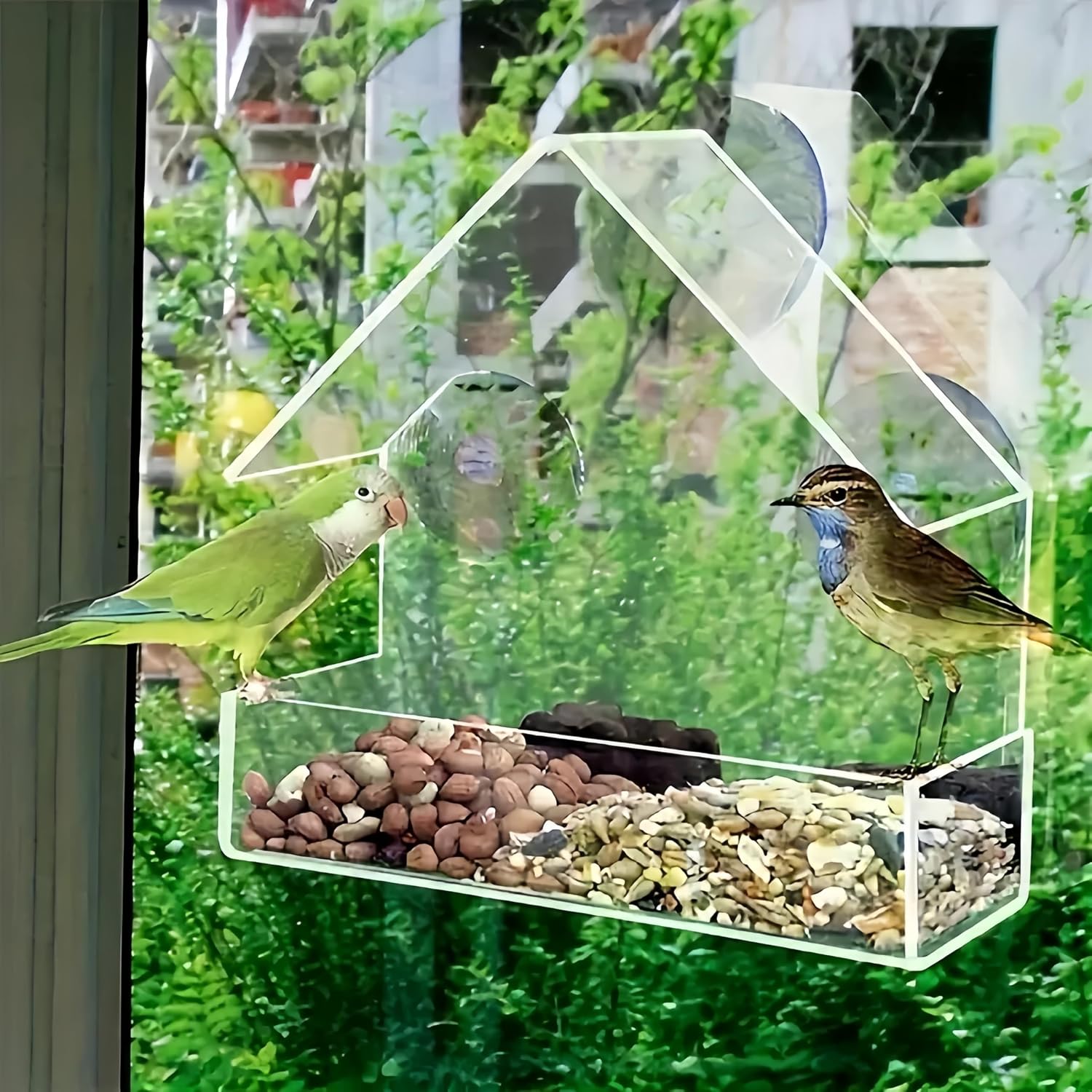
The feeder: Clear Acrylic Window-Mounted Bird Feeder
 Visit on Amazon →
This is the window feeder I keep coming back to for up-close watching. Acrylic does what acrylic does well here: it is clear, so you see the whole bird instead of a silhouette behind a tinted panel, and it wipes clean instead of holding stains the way some opaque trays do. The easy-clean design is the part that matters most to me, because the single biggest reason a window feeder fails is that nobody wants to take it apart in January. The tray comes off, the whole thing goes in the sink, and the job is done before the coffee finishes brewing.
It is not a squirrel-proof anything. It is a window feeder, and a fox squirrel that finds it will treat it as a buffet. Mount it on glass away from a deck rail, a fence, or a branch a squirrel can launch from, and you will get songbirds, which is the point. Acrylic will haze if you scrub it with anything abrasive, so use a soft sponge and skip the scouring pad.
Flaws but not dealbreakers: acrylic scratches, and a window feeder is exposed to weather on all sides. Hand wash it, dry it fully before it goes back up, and it holds up. Anyone who wants birds at eye level from a kitchen table or a home office desk is the right buyer for this one.
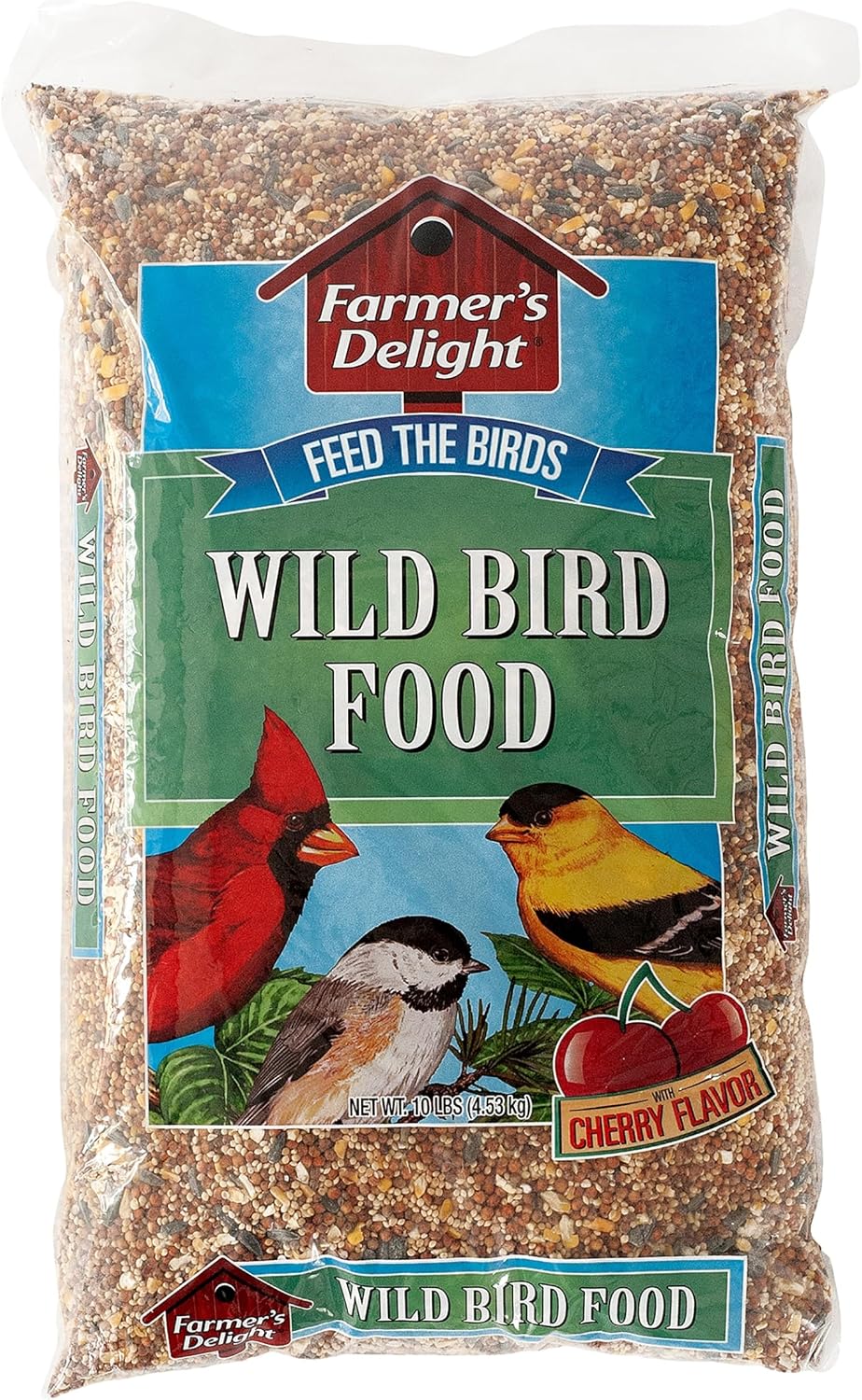
The seed: Wagner's 53002 Farmer's Delight Wild Bird Food with Cherry Flavor, 10-Pound Bag
 Visit on Amazon →
A 10-pound bag of wild bird food with cherry flavor is the bag most people grab at the hardware store, and for a window feeder it does the job. It is a mixed blend, it pours easily into a shallow tray, and 10 pounds is a manageable size to keep in a sealed garage bin instead of a 40-pound sack that goes stale before you finish it.
Two things happen before this bag goes into a window tray. First, I read the panel. My rule is that heavy filler like milo and red millet is a disqualifier for a platform feeder, because a window tray holds a small amount of seed and you cannot afford half of it to sit there uneaten. If the mix in your bag is mostly filler, the tray will tell you inside a week, and you move to a single-ingredient seed instead. Second, I keep the bag sealed and dry. An open bag in a humid garage clumps, and clumped seed in a shallow tray molds fast.
Flaws but not dealbreakers: a mixed blend with flavoring is a starter bag, not a precision tool. Expect house finches, chickadees, and house sparrows. If you want cardinals and goldfinches working the same tray, you will end up running two feeders with two different seeds. Anyone who wants one bag, one feeder, and birds on the glass this weekend is the right buyer.
The actual setup, step by step
Now the part you came for. This works on any window that faces something other than a blank wall.
Step one: pick the window. Three things decide it. It should be a window you actually sit near, because a feeder you do not watch is just maintenance. It should be at least three feet from where you sit on the inside, so you are not moving on the other side of the glass every time a chickadee lands. And it should not be a window with a cat perch under it, because no amount of placement beats a cat at close range.
Step two: check the strike math. The rule I follow is three feet or thirty. A feeder mounted within three feet of the glass means a bird leaving it cannot build enough speed to hurt itself on the pane, and a feeder mounted more than thirty feet out means the bird has room to see the glass and turn. The dangerous zone is the middle, five to fifteen feet, where birds launch with speed and hit the window at full tilt. Mount close, or mount far.
Step three: mount it and test it before the birds do. Follow the mounting instructions that come in the box, then tug the tray edge with two fingers. Any window-mounted feeder gets my cold-morning check too: after the first hard freeze, press on the tray before the birds find it, not after. A feeder that has been up since October and holds seed through a January thaw is one thing. A feeder you hang in December and trust without testing is how trays end up on the porch.
Step four: place it near cover, not under it. Birds want a shrub or a tree within ten feet so they have somewhere to retreat, but nothing directly overhead. A branch above the feeder is a squirrel highway and a hawk blind at the same time.
Step five: fill it level, not heaped. Seed should sit level with the tray edge or just under it. A heaped tray looks generous and turns into a wet clump after the first rain, because the top layer wicks water down and the bottom layer never dries. Fill less, refill more often.
Step six: give the birds two weeks. A window feeder is often the last feeder a yard discovers, because birds find food by watching other birds, not by reading your intentions. Keep it filled even when it looks untouched, and keep your other feeders running. The first customer is usually a chickadee, and the finches follow within days of that.
Step seven: build the cleaning routine now, not after the first sick bird. Once a week, take the feeder apart. Hot soapy water on every surface a bird touches, including the perches and the tray seams. Then a rinse in a diluted bleach solution, roughly one part bleach to nine parts water, followed by a thorough fresh-water rinse. Dry it completely before it goes back up, because seed poured into a wet tray molds from the bottom. In rain or in summer heat, clean twice a week. Every salmonella case I have seen in rehab traced back to a dirty feeder nobody took apart since fall.
Step eight: keep the log. Write down what shows up, the date it first shows up, and roughly how much seed the tray draws in a week. That is the whole system. After one season you will know whether your tray empties in four days or sits for two weeks, and that number tells you more about your seed and your placement than anything else you can measure.
What this setup will not fix
Squirrels. Squirrel-proof is a marketing word. Squirrel-resistant is a real thing, and the difference is measured in weeks, not in the claim on the box. A window feeder on a bare pane with no launch point nearby is the closest thing to squirrel-proof you get without buying a caged feeder, and even then, a determined fox squirrel will find the one approach you did not think about.
Hawks and cats. A window feeder concentrates birds in one small, predictable spot. That is the trade for the view. Keep cover nearby, keep the cat inside, and accept that a sharp-shinned hawk will eventually figure out your yard. That is a healthy yard, not a broken feeder.
Hulls on the deck. A mixed blend with sunflower in it leaves hulls under the window, and hulls sprout. If your feeder hangs over a deck, a patio, or a neighbor's sightline, a no-mess blend costs more per pound and saves you a broom and an argument.
The rest of your windows. Mounting this feeder three feet from one pane does not protect the other side of the house. Window strikes happen at the windows you are not thinking about, so treat the rest of the glass separately.
Disease, if you skip step seven. There is no feeder design that cleans itself. The routine is the feature.
The math that matters
The two items here are inexpensive, and both prices change, so check current Amazon price on each before you decide. What actually costs you something is time and waste.
A window tray that goes uncleaned for a month costs you a full teardown and a bag of ruined seed. A blend your yard ignores costs you the same cleaning time for half the birds. Ten minutes a week on the sink, plus a refill every few days in winter, is the entire ongoing bill, and it is the difference between a feeder that runs for four seasons and a feeder that comes down in February.
That is the job. Hang it three feet from the glass, fill it level, wash it every week, and let the log tell you what to change next season.