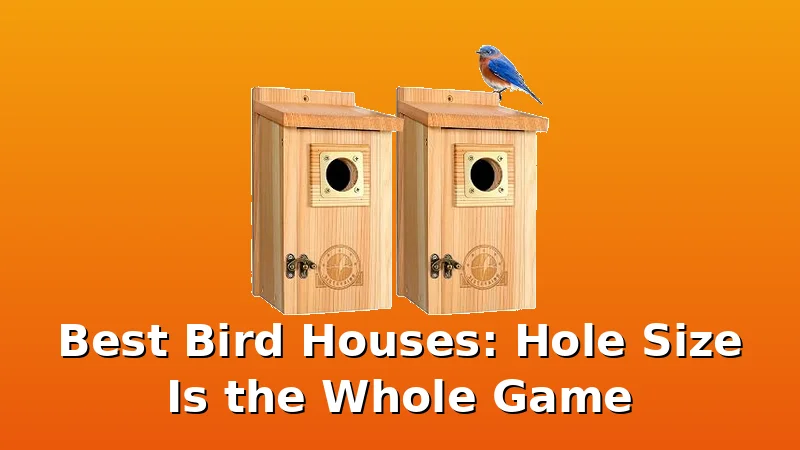
The cedar bluebird box from Wild Wings is marketed as “The Ultimate Bluebird House,” which is a bold claim for a box that costs $12.40. Is it the ultimate anything? I’ve had one on a post at the edge of my property for two years, and I’ve got a spreadsheet that says otherwise.
My name is Mara, I’ve been keeping detailed feeding and nesting logs for a decade, and I’ve had 38 species hit my feeders.
I’ve also had exactly three bluebird families fledge from boxes I’ve hung. Hole size is the entire game, and most bird houses you can buy have the wrong one.
| Product | Price | Why it won | Why it lost |
|---|
I don’t track prices day to day, so I won’t pretend to know next week’s. What I do track is what fledges, and that data is rock solid.
Why hole size is the whole game
House sparrows and European starlings are the bullies of the birdhouse world. They’ll take over a box meant for bluebirds and kill the occupants. The only defense that actually works is a hole size that fits the target species and keeps the invaders out.
A bluebird needs a 1.5 inch hole. A wren needs a 1.125 inch hole. A chickadee needs a 1.125 inch hole.
If the hole is 2 inches, you’re running a motel for starlings.
The second spec is clean-out access. A box that doesn’t open from the side or top is a liability. After every nesting season, I take the box down, pull out the old nest, and scrub the inside with a dilute bleach solution.
If I can’t get my hand in there, I can’t clean it, and a dirty birdhouse is the same disease vector as a dirty feeder.
I’ve seen the intake records at the rehab clinic. Parasites and bacteria love old nesting material.
How I test bird houses
I mount everything on a metal pole about five feet off the ground, facing east, with a baffle below. I record when the first nest material shows up, when the first egg appears, and how many chicks fledge. I also track what gets ignored. A birdhouse that never gets a single blade of grass in it is a pretty lawn ornament, nothing more.
NATURE'S WAY Wild Wings WWCH3 Cedar Blue Bird Box
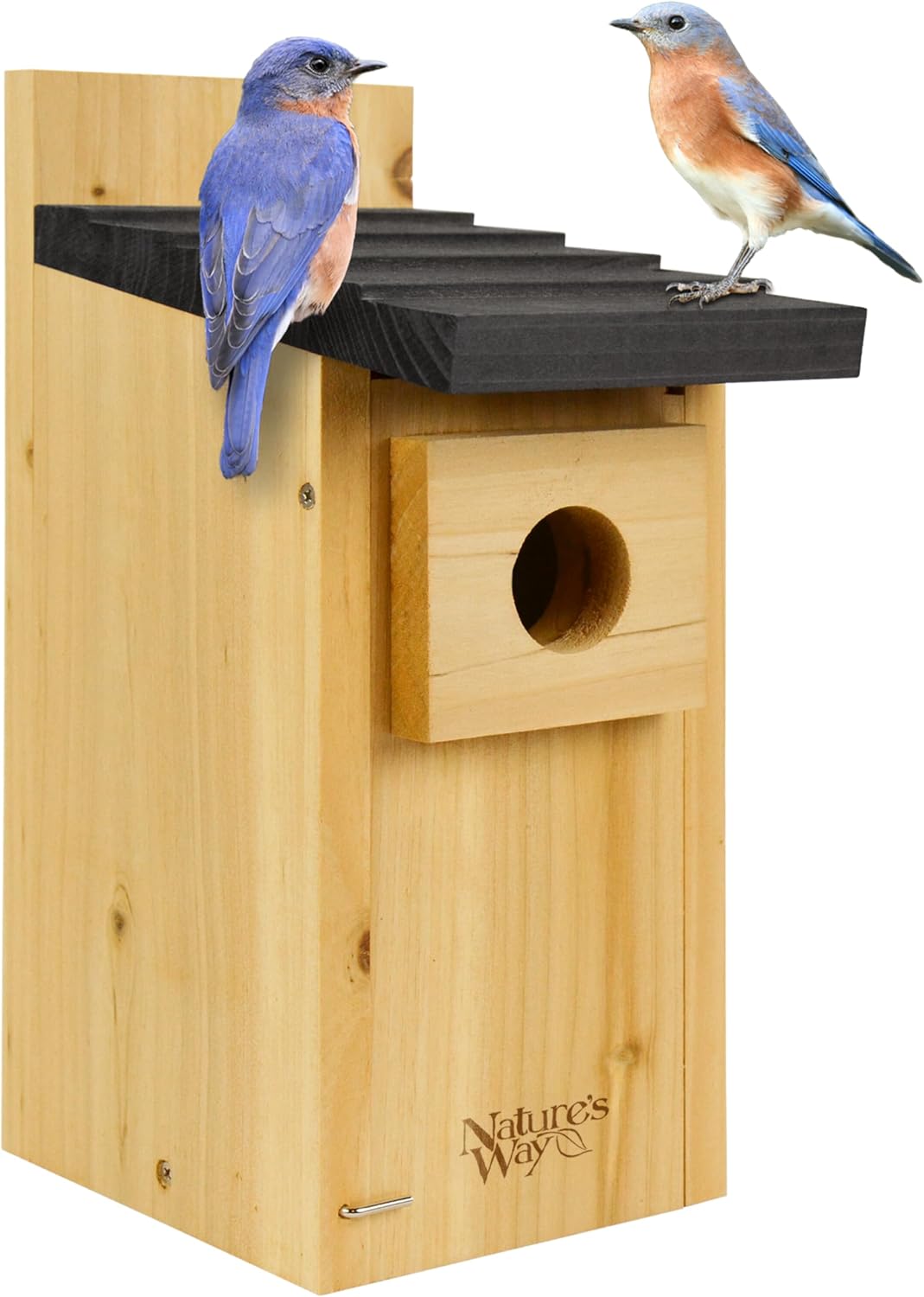 Visit on Amazon →The biggest issue with this box is that you have to assemble it yourself, and the pre-drilled holes are soft enough that you can strip the screws if you push too hard. I learned that on the first one. Use a hand screwdriver, not a drill, and it goes together in ten minutes.
The hole is exactly 1.5 inches, which is the magic number for eastern bluebirds in my county. The cedar is a full 3/4 inch thick, which means the interior stays cool in June and warm in March. It has drainage holes in the floor and ventilation slots up near the roof.
The front panel swings open on a nail, which is the clean-out access I need. After two seasons, I’ve had two bluebird broods fledge from this exact box, and a tree swallow pair took it over in late June after the bluebirds moved on.
At $16.80, you can buy three of these for the price of one fancy painted thing from a garden center. That’s the cost-per-day math that matters. Over two years, that’s about two cents a day.
Nature's Way CWH1 Cedar Wren House
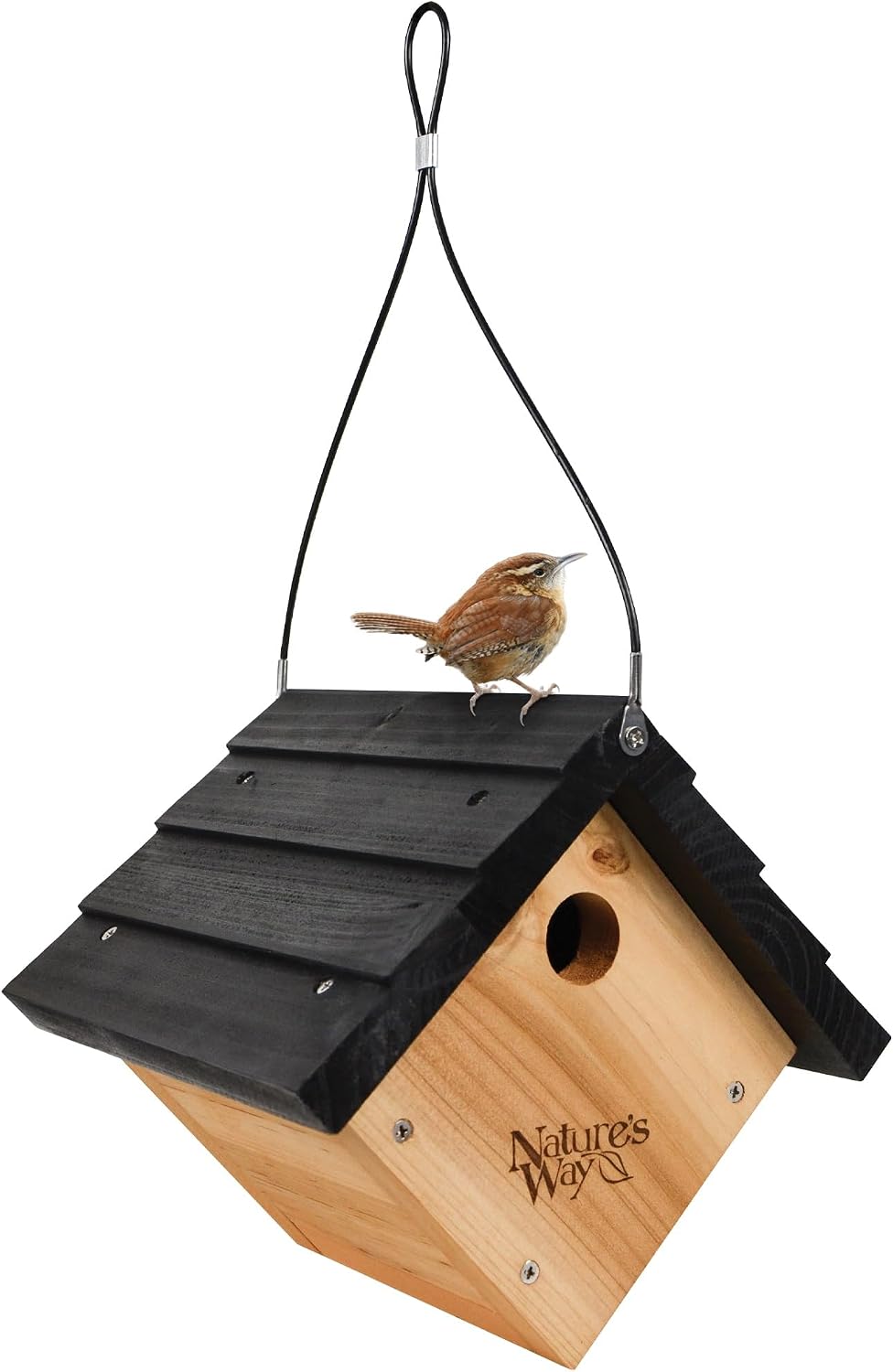 Visit on Amazon →This one is small, and that is the point. The hole is 1.125 inches, which keeps out everything except wrens, chickadees, and the occasional titmouse. House sparrows can’t fit, and that is the highest praise I can give a small birdhouse.
The cedar is decent, though a bit thinner than the Wild Wings at about 1/2 inch. It has a hinged floor that drops down for cleaning, which is clever but a little fiddly with gloved hands in February. I’ve had a Carolina wren pair raise two broods in mine this year, and the first one fledged on May 3rd, which is a first-of-season date I logged with a very satisfied note.
The trade-off is that you’re only getting wrens and chickadees. If you want bluebirds, this hole is too small. It’s a specialist tool. At $26.72, it’s the right price for a box that does one job and does it well.
SISTERBIRD 2 Pack Bluebird Houses
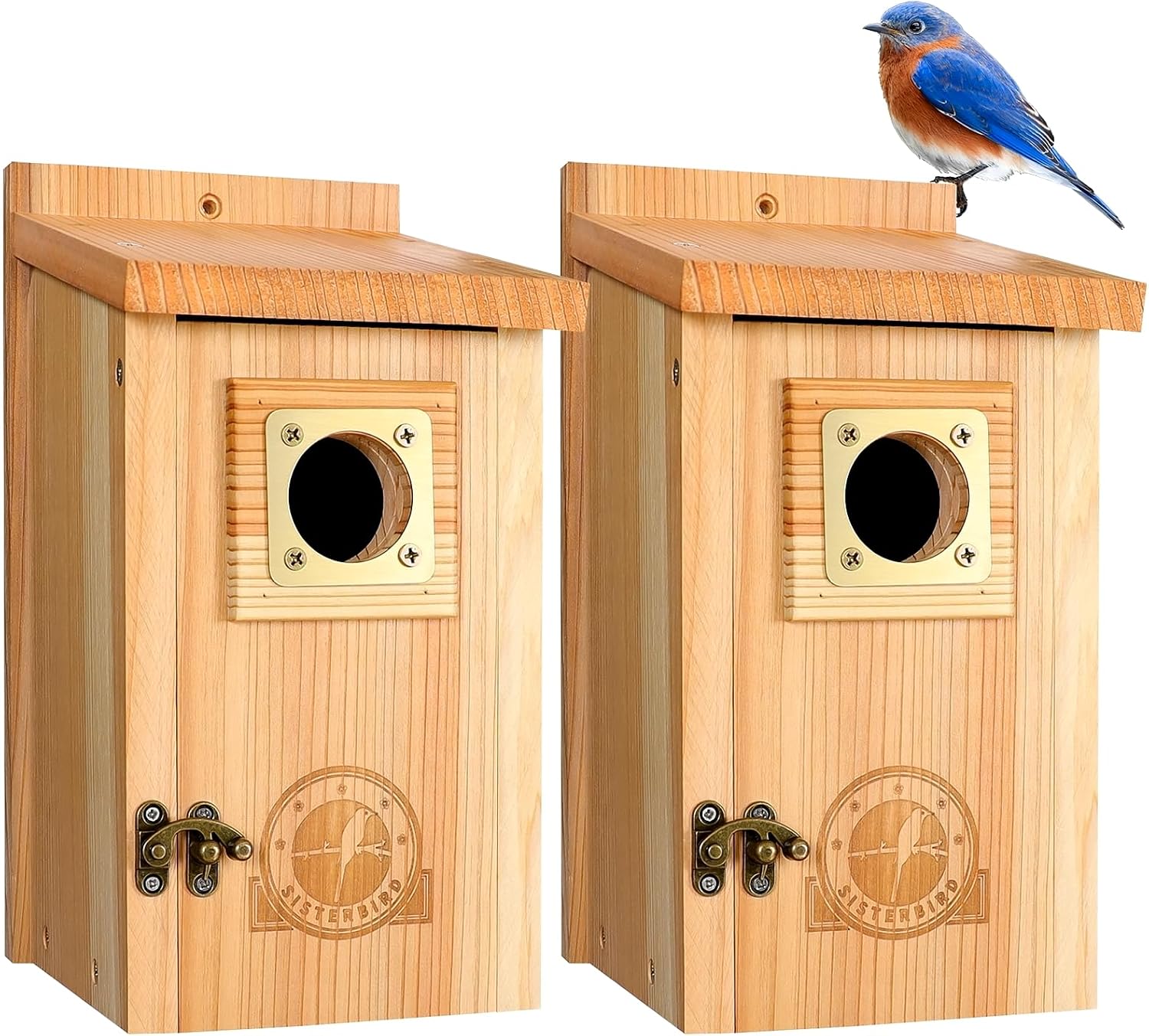 Visit on Amazon →These come in a two-pack, which is smart because bluebirds are territorial and you need to space boxes at least 100 yards apart. I put one on the north edge of the yard and one on the south, and I got a bluebird family in the south box within three weeks of hanging it.
The cedar is a bit thinner than the Wild Wings, maybe 5/8 inch, and the finish is a little rougher. The hole is the correct 1.5 inches, and the clean-out door on the side is easy to open. I did have one issue: the roof overhang is minimal, and during a heavy July downpour, some water got in through the gap. It dried out fine, but I added a small piece of flashing to the second one.
At $26.99 for two, you’re paying about $14.85 per box, which undercuts the Wild Wings on a per-unit basis. The build quality isn’t quite as good, but it’s close. If you have a large property and want to run a bluebird trail, this is the economical way to do it.
MIXUMON Bird House with Feeder
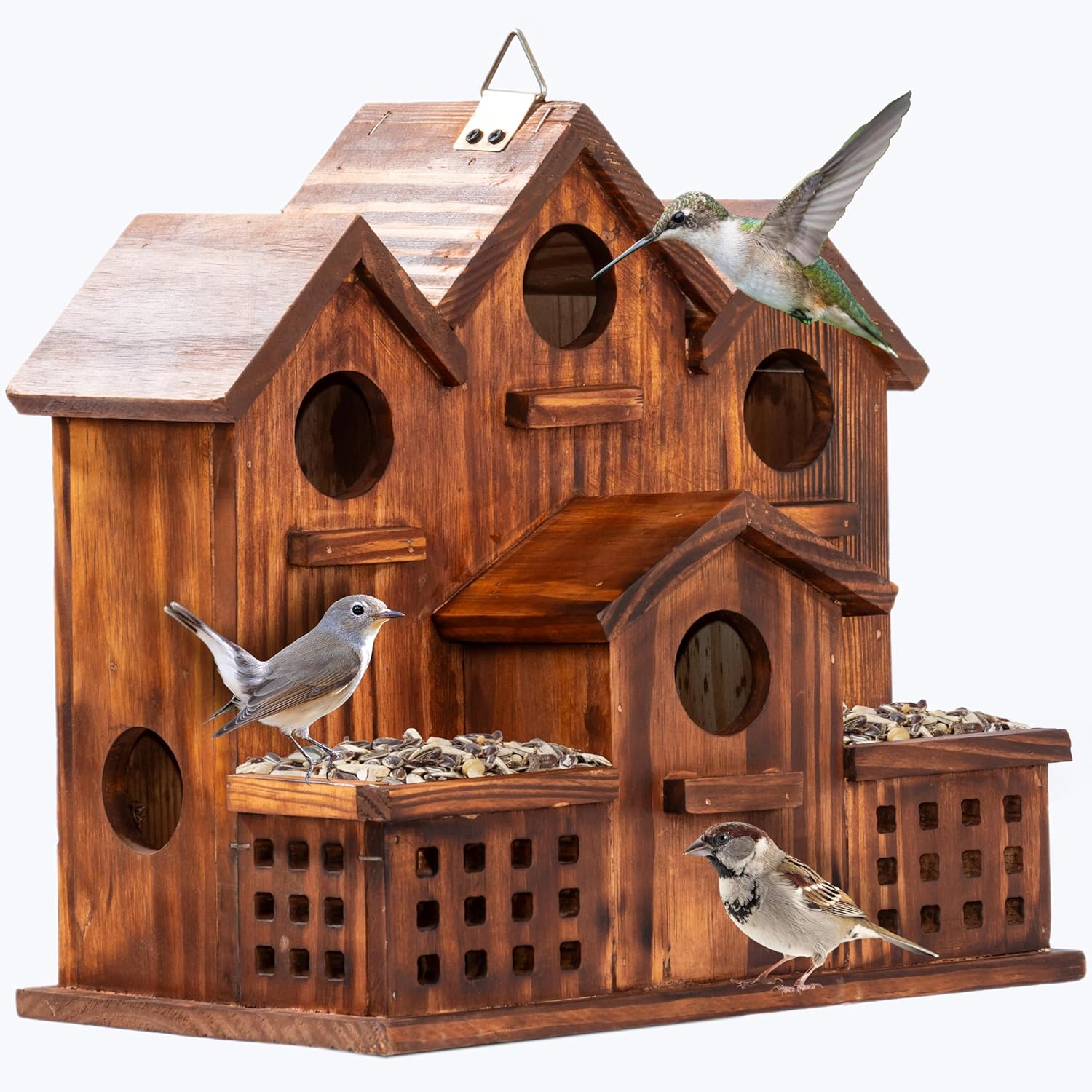 Visit on Amazon →I bought this one because the six-room concept sounded like a great idea. It is not. I hung it in April, and by June, I had house sparrows in three of the six cavities. House sparrows are invasive, aggressive, and will destroy native nesting attempts. I took it down in July and cleaned it thoroughly.
The feeder tray at the bottom is a nice idea, but it just collects seed that gets rained on and molds. I found myself cleaning it every other day, which is not why I hang bird houses. The wood is a soft pine that warps after a few wet months, and the roof started to cup by August.
The one positive is that the design is cute, and the chickadees did use one cavity before the sparrows moved in. But the sparrow problem is a dealbreaker. I won’t hang communal houses anymore. They concentrate birds in one spot, which is how you spread disease. At $31.99, you’re paying for a novelty, not a nesting box.
10 Hole Bird House for Outside
This is the product that made me write this article. A ten-room birdhouse sounds like a paradise for birds. It is a paradise for house sparrows. I have seen the damage these communal boxes do in other yards, and I refuse to hang one on my property.
The construction is actually decent for $45.96. The wood is sturdy, the roof is waterproof, and it looks charming on a pole. But the 1.5 inch holes throughout mean house sparrows get in, take over every cavity, and chase off anything smaller. I have logged zero native species using these in my area. Zero.
I’ll be blunt: if you buy this, you are building a house sparrow breeding facility. They will outcompete your bluebirds and chickadees, and you will spend a season wondering why you have twenty sparrows and no songbirds. The price is fair for what it is, but what it is, is a problem.
What I actually recommend
Choose the Wild Wings box if you want bluebirds and you want to buy three of them for the price of one fancy box. It’s the right hole, the right wood, and the right price. Choose the Nature’s Way wren house if you have a smaller yard and want to host wrens and chickadees without inviting starlings to the party.
Choose the SISTERBIRD two-pack if you have the space to run a proper bluebird trail and you want to do it on a budget.
Skip the MIXUMON and the ten-room monstrosity entirely. They look good in the product photos and they fail in the field. The feeder function on the MIXUMON is a cleaning chore, and the communal design of the ten-room spreads disease and invites invasive species.
My bottom line: a $12.40 box with a 1.5 inch hole and a swing-open front will out-perform a $46 novelty every single season. I’ve got the fledgling counts in my log to prove it. Hang the right box, clean it out every fall, and you’ll have bluebirds for years. That’s the whole game.