Most people start backyard birding the same way. They hang one feeder, wait two weeks, and decide the birds simply are not coming. The log I keep says otherwise. Ten years of daily species counts, first-of-season dates, and cups of seed per week all point at the same two variables: where the feeder hangs and whether there is water within sight of it.
A window feeder and bird bath setup fixes both problems in one afternoon. The feeder puts seed within three feet of your glass, which is exactly where it belongs, for reasons that have nothing to do with how it looks in a product photo. The bath puts moving water in the yard, and from June through August my log shows more species at the water than at every feeder combined.
This is not a guide to buying the fanciest gear on the shelf. It is a guide to placement, water depth, cleaning rhythm, and the two pieces I would hang first if I were starting over with a bare yard and a free Saturday.
Why you should trust me
I have been feeding backyard birds for twelve years and keeping the log for ten of them. The log is a spreadsheet: every species that visits, the first-of-season date for each migrant, and how many cups of seed each feeder draws per week. It decides every recommendation I make, because birds do not care about a powder-coated finish and the log does not care what the box promised.
The other half of my life is rehab. I am a licensed wildlife rehabilitator, I work part time at a small animal clinic, and I run the songbird side of a county wildlife rescue out of my garage, with the incubator in the laundry room and the scale on the kitchen counter. My county life list sits at 214 species, 38 of which have hit my feeders. Every salmonella and house finch eye disease case I have handled in intake traced back to a feeder nobody took apart since fall. That is why cleaning shows up in everything I write, and why it shows up in this guide before the shopping links do.
What to check before you hang anything
Six decisions matter more than brand or price. Get these right and almost any feeder in this category will work.
Distance from glass. Put the feeder within three feet of the window, or more than thirty feet out. The middle zone is where window strikes happen, because a bird leaving a feeder ten to thirty feet away has room to build speed before it hits the pane. Three feet gives it no runway at all. A white-throated sparrow that survived a strike on my dining room glass is the reason I hang my own window feeder where I do.
How it attaches. Suction cups hold fine on clean, smooth glass in mild weather. They are the weak point the first time the temperature drops into single digits. If your winters are real winters, plan on a bracket that bolts through the sill, or move the window feeder indoors for the cold months and hang a pole feeder instead.
Whether you can take it apart. If a feeder cannot be disassembled without a screwdriver and a prayer, it will not get cleaned, and a feeder that does not get cleaned is a disease vector with a perch. Ten minutes, sink, brush, done. That is the standard.
Water depth. One to two inches at the center. Songbirds need to stand in the water and splash, not swim in it. A deep basin is a drowning hazard for small birds and a nursery for mosquitoes.
Moving water. A pump that keeps the surface rippling is what birds hear and see from across the yard, and it keeps mosquitoes from laying in still water. This is the single biggest difference between a bath that gets used and a bath that turns green.
Seed quality. Black-oil sunflower or sunflower hearts. Read the ingredient list and put the bag back if milo or red millet is near the top. Filler sits uneaten, molds in the rain, and doubles your cleaning load.
The window feeder, and the placement rule that matters most
A window feeder is the only feeder that puts birds at eye level from your couch. That is worth something, but the real argument for it is safety. Mounted within three feet of the glass, it removes the runway that causes strikes, and it puts the seed where you will actually notice an empty tray and refill it.
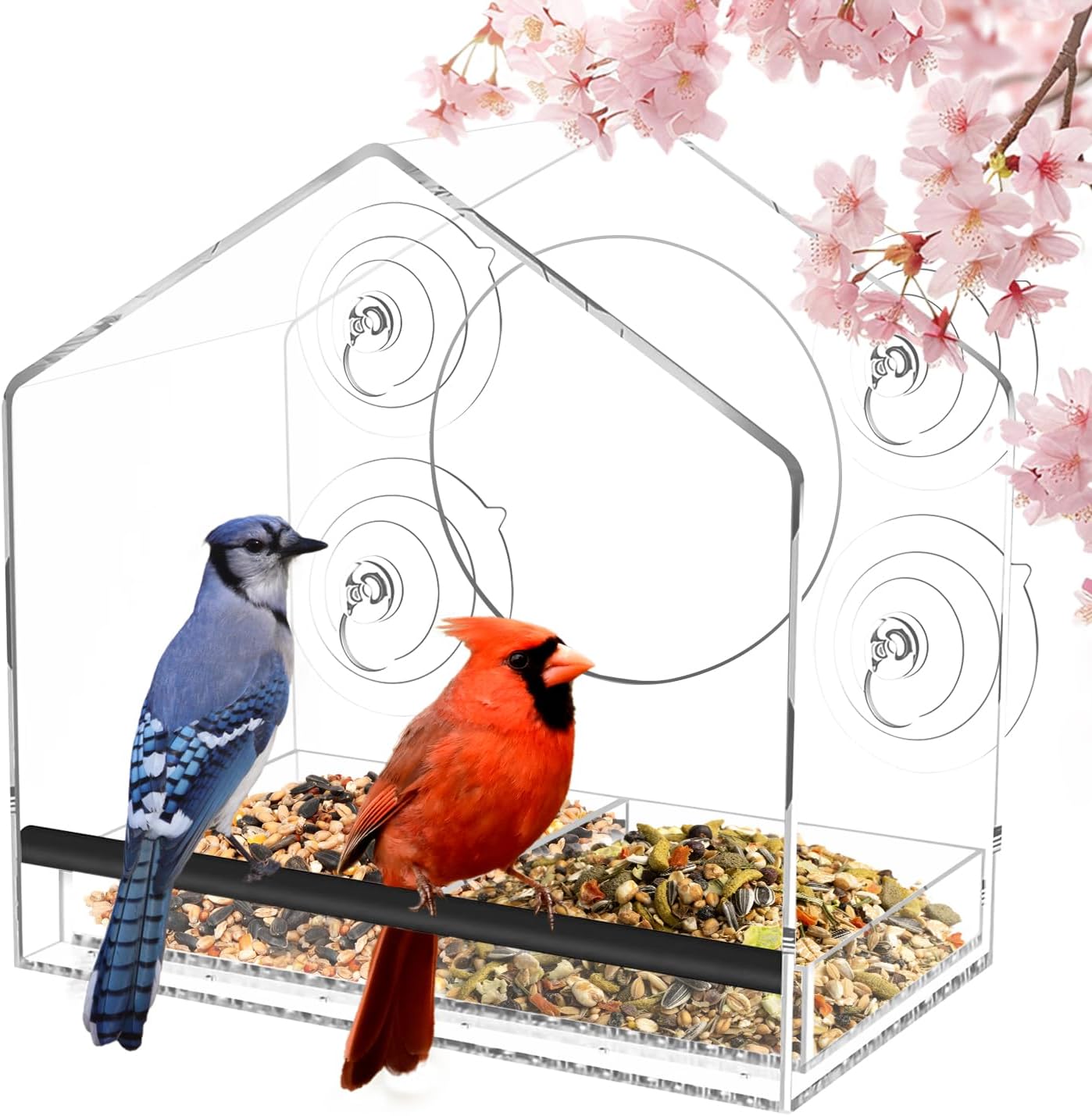
Start here: Clear Window Bird Feeder with Strong Suction Cups
 Visit on Amazon →
This is the clear tray style, the kind that mounts directly to the pane on suction cups so you watch chickadees, house finches, and the occasional downy woodpecker work a few inches from your nose. The clear body is the point. Opaque feeders block the view you paid for.
Treat the suction cups as the maintenance item they are. Clean the glass first with warm soapy water, then wipe it with vinegar or rubbing alcohol and let it dry completely. Dust and kitchen film are why cups let go. Press each cup firmly against the glass one at a time and give the whole thing a light pull before you add seed. Then check it every week, and more often once the temperature swings start, because a cup that has been holding since June is not the same cup in January. If you want this to be a four-season fixture in a cold climate, pair it with a window bracket, or bring it in before the first hard freeze and run a hanging feeder through the winter.
Fill it with sunflower hearts or a no-mess blend. Hulls on the sill and on the floor below the window are the number one complaint from anyone who shares a wall with a neighbor, and hulls under a window feeder are also what pulls mice.
Flaws but not dealbreakers: Suction cups are a warm-season attachment in a northern yard, full stop. The tray also needs to come down and get scrubbed on a schedule, because a window feeder is close enough to the house that you have no excuse for letting it go.
Water first, seed second
If you only do one thing this month, do the water. My log's best months are May and June, and even then the bath outdraws the feeders. A bird that will not touch a seed blend will stop for a drink and a bath on a hot afternoon, and moving water pulls in species that never visit a tray: warblers, vireos, tanagers, and every thrush in the county.
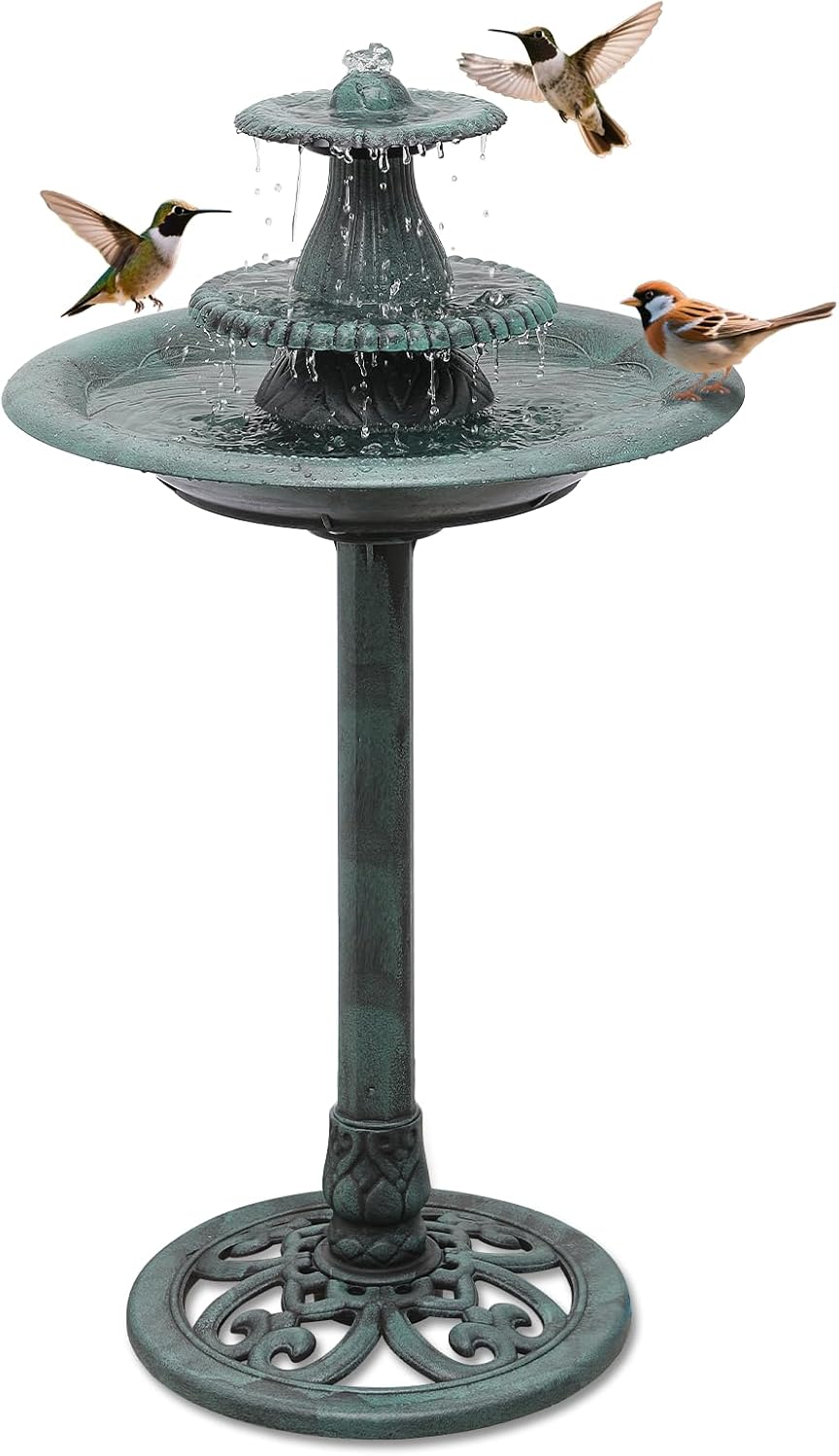
Start here: Athena Collection 37" Bird Bath for Outside with Recirculating Pump, Green
 Visit on Amazon →
A 37-inch pedestal bath puts the basin above ground level, which keeps the water away from ground traffic and splash, and the recirculating pump keeps the surface moving so it stays audible and less attractive to mosquitoes. The green finish disappears against a lawn, which matters more than people admit. A bath that looks like a lawn ornament gets moved to the back corner, and a bath in the back corner gets ignored.
Two things to check before you commit to a spot. First, how the pump is powered, because a recirculating pump needs a power source and you want that figured out before you fill the basin. Second, the water level. Fill it so the deepest point is one to two inches and no more, even if the basin is capable of holding more. Then place it ten to fifteen feet from a shrub or tree line so birds have escape cover within a short flight, and within sight of the same window as your feeder so you actually watch it.
The pump is the part that needs attention. Feathers, seed hulls, and algae collect at the intake, and a clogged pump is a still bath with a cord attached. Pull the intake and rinse it every week or two, dump and refill the basin every two to three days in summer, and scrub the bowl with a brush whenever you see a film. In a Wisconsin winter, bring the pump inside before the first hard freeze and either store the basin or swap in a heated unit. A pump that runs through ice is a broken pump.
Flaws but not dealbreakers: A pedestal bath in a windy yard can tip if the ground under it is not level, so set it on packed soil or a paver and check it after the first storm. And no pump removes the need for water changes. Moving water is cleaner water, not self-cleaning water.
The one-afternoon setup, step by step
Step one: pick the window. Choose the window you sit near, not the one with the best view of the yard. Facing matters too. An east or south window gets morning sun, which melts ice off a tray faster and dries it out between cleanings.
Step two: clean the glass. Warm soapy water, then vinegar or rubbing alcohol, then dry. Do not skip this. Suction cups fail on film.
Step three: mount the window feeder. One cup at a time, pressed firmly, then a light pull test on the whole unit. Do not load seed until you are satisfied the mount is solid.
Step four: load light. A cup or two of sunflower hearts, not a full tray. You want to see the draw, which is how fast the feeder empties, and you want to learn how much your yard actually eats in a week.
Step five: site the bath. Level ground, ten to fifteen feet from cover, within sight of the window, and within reach of whatever powers the pump. Part sun is fine. Full afternoon sun grows algae faster.
Step six: fill to depth and start the pump. One to two inches of water, then confirm the flow reaches the whole basin rather than one corner.
Step seven: set the cleaning rhythm now, not later. Feeder apart and scrubbed every one to two weeks. Bath water dumped and refilled every two to three days in warm weather. Pump intake rinsed weekly.
Step eight: write it down. Cups per week, species, first-of-season dates. Four weeks of notes will teach you more about your yard than any article, including this one.
Cleaning and disease: the part nobody wants to read
Every salmonella case I have seen in rehab traced back to a dirty feeder. Every one. The protocol is not complicated. Take the feeder fully apart, scrub every surface with a brush and hot soapy water, then disinfect with a diluted bleach solution, rinse until you cannot smell it, and let it dry completely in the sun before it goes back up.
If you see a bird that looks sick, with crusted or swollen eyes, or that sits puffed up under the feeder while others feed, take everything down for two weeks, clean it, and start over. House finch eye disease spreads at the perch, and a feeder you leave up out of habit is how it keeps spreading.
The bath has its own version of this. Dump the water, scrub the bowl, refill. Do not top off a basin that has been sitting for a week, because you are just concentrating whatever has been bathing and drinking in it. And do not hang a feeder directly over a bath. Hulls, droppings, and mold spores land in the water.
Mistakes that keep birds away
Feeder placed ten to thirty feet from the glass, which is the strike zone.
Suction cups on dirty glass, or cups left up through a hard freeze.
Water deeper than two inches, or water that sits still long enough to turn green.
Seed blends padded with milo and red millet that nobody eats.
A feeder hung somewhere you cannot see it, which means you stop refilling it.
A pump intake that has not been rinsed since you set the bath up.
A bath under a feeder, catching everything the feeder drops.
Where the money goes
The feeder and the bath are one-time purchases, and the links above carry the live numbers. The recurring cost is seed and time. Buying sunflower in bulk lowers the cost per pound and eliminates hull litter under the platform, while no-mess blends cost more per pound and buy you a clean deck and a quiet neighbor. Both are honest trades. The bath costs water and a few minutes every couple of days.
What you are really spending is attention. The log does not fill itself, and a feeder that gets cleaned every two weeks draws more birds than a prettier one that gets hosed off twice a season.
What I left off this list
This guide is about the two pieces that do the most work in a bare yard, so a few categories are missing on purpose. Heated baths belong in a winter guide, and any heated model needs its wattage and thermostat checked before you trust it near birds. Tube feeders, suet cages, and nyjer socks are their own article. Cameras that photograph your visitors are a different hobby with a different budget, and some of them come with a subscription that I refuse to pay.
Start with the window, then the water. Hang the feeder within three feet of the glass, set the bath ten to fifteen feet from cover, keep the water shallow and moving, and put both on a cleaning schedule you will actually keep. That is the whole job, and it is the same job whether you have been at this for a decade or you are hanging your first tray this weekend.