
Well, here's a thing I've learned in twelve years of feeding backyard birds: the birds that perch are easy. Chickadees, titmice, goldfinches, they'll hang off anything. But the ground feeders, the ones that want their feet on something solid while they eat, they're pickier.
A cardinal doesn't want to cling to a mesh tube. A junco doesn't want to swing. They want a platform, something that feels like a table.
I've had a mix of platform feeders in my yard for the better part of a decade, and I've watched the log fill with species that never touched my tube feeders.
The fox squirrels have tested every single one. Here's what survived.
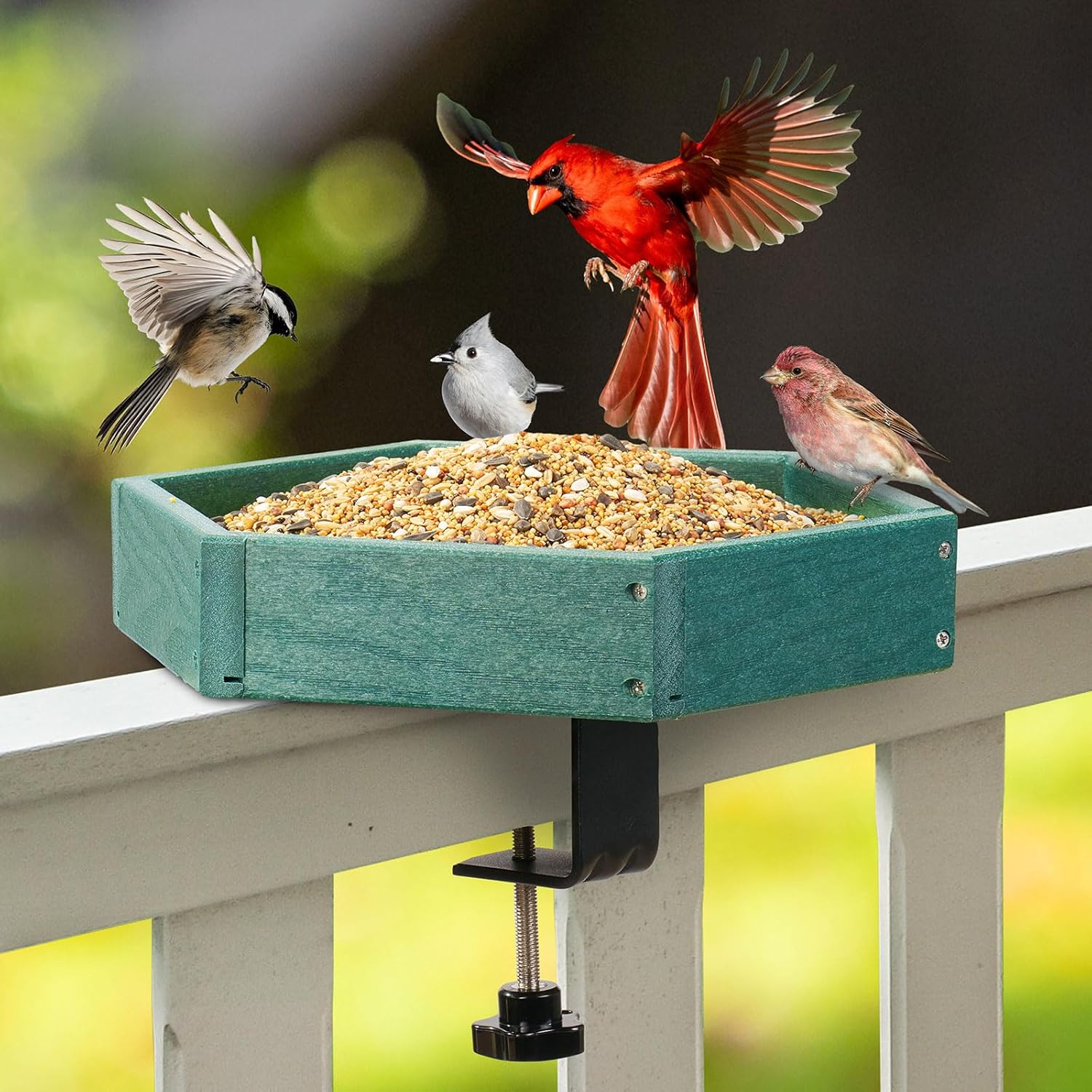
Kingsyard Clamp-On Deck Bird Feeder for Balcony Railings, No Drill | Recycled...
Perfect for railings, zero drilling, brings the birds right to the window
Visit on Amazon →How I test these things
Before I say anything is good, it has to earn a spot on my fence. That means it survives a Wisconsin winter, gets taken apart and scrubbed at least a dozen times, and goes three weeks against the neighborhood fox squirrels.
If a squirrel reaches the seed once, it's not proof in my book. It's resistant, maybe. I count cups of seed per week, and I weigh every rehab bird in grams, so I notice when a feeder draws more or less.
The log doesn't lie.
The winner: Kingsyard Platform Bird Feeder
I'll be honest, I didn't expect much. A $28 platform feeder usually means thin wood and staples. This one isn't that. The version I own has a solid metal frame and a tray that doesn't flex when a mourning dove lands on it.
The mesh bottom is the smart part. Rain runs through instead of pooling, so the seed stays dry. I've had mine for two winters and it's been through at least four freeze-thaw cycles without a single joint coming loose.
The draw is what sold me. In January, this thing pulls three cups of black-oil sunflower a week, mostly cardinals and juncos. The white-throated sparrows love it too, the ones I've been tracking since my first window strike rehab.
The tray is deep enough that seed doesn't blow out in a gust, but shallow enough that I can sweep it clean in under a minute.
The chain is the weak point. It's long enough that a squirrel can hang from the top and stretch down to the tray.
My fox squirrel, the one I've been watching for three weeks, managed it once. Once. That's better than most.
If you want a platform that works on a pole or hangs from a hook, this is the one. The price is right, it cleans up fast, and the birds actually use it.
Kingsyard Clamp-On Deck Feeder
This is the same brand, but a completely different animal. It clamps onto a railing, no drilling, no pole. I put one on my deck rail three feet from the dining room glass, exactly where Audubon says to put window feeders to prevent strikes. The clamp is strong. It's been through a Wisconsin February with wind and snow and it hasn't moved.
The downside is the clamp. You're stuck with a railing. If you want to move it to a pole, you can't. But if you have a deck or a balcony, this is the easiest way to get birds close. The tray is a bit smaller than the hanging version, so it draws about two cups a week here. The cardinals use it, the juncos use it, and the house finches have figured out how to perch on the edge without spilling.
It's $17.99, which is cheap enough that you can buy two and put one on each side of the yard. That's what I did, and the log shows more visits to the railing feeders than the pole feeders in spring. The birds like being close to cover.
Hanging Metal Mesh Tub Feeder
This one is for the clingers. Woodpeckers, nuthatches, chickadees, they all prefer something they can hang off sideways. The mesh tub design lets them do that. I hung this next to my suet cage and the downy woodpeckers split their time between the two.
The mesh is the selling point. It drains well, so the seed doesn't rot. The tub shape holds about four cups, which is less than the tray feeders, but that's fine because the clingers eat fast and move on. The build is solid, a metal frame with a mesh that doesn't bend. I've had mine for six months and it's held up fine.
The limitation is capacity. If you want to feed a flock of cardinals, this isn't the one. It's a supplemental feeder, something to put next to the main platform. The price is around $22, which is fair for the build quality.
Large Metal Bird Feeder House
This is the pretty one. It looks like a little house, with a roof that keeps the seed dry. The birds don't care about the looks, but I do. It sits on a pole in the middle of the yard and it doesn't look like an eyesore.
The metal is thick, the roof is solid, and the tray is big enough for a cardinal to land without crowding. It draws about the same as the Kingsyard hanging version, three cups a week in January. The cleaning is a bit more work because the roof is an extra piece to take off, but it comes apart in two motions and goes in the sink.
The price is around $35, which is the highest on this list. You're paying for the looks and the build. If you want a feeder that does the job and looks decent doing it, this is the one. If you just want function, the Kingsyard is cheaper and does the same thing.
Samhe Metal Hanging Feeder
This is the budget pick. At $19, it's the cheapest metal feeder I've tested that didn't fall apart in the first month. The mesh is fine, the tray is fine, and it holds about three cups of seed.
The hanger is the weak point. It's a thin wire that bends if you look at it wrong. I had to crimp it back into shape after a squirrel jumped on it in week two. The seed port is also a bit narrow, so the bigger birds have to work to get at the seed. The finches and chickadees don't mind, but the cardinals mostly skip it.
If you're on a tight budget and you want a metal feeder that works, this is it. But don't expect it to survive a determined squirrel for long. It's squirrel-resistant for a week, maybe two.
Metal Bird Feeder House 2-pack
This is the value play. Two feeders for around $26, which works out to $13 each. That's hard to beat. The build is decent, a metal frame with a mesh tray, and the roof keeps the seed dry.
The individual size is smaller than the other options. Each feeder holds about two cups, so you're refilling more often. I put one on the fence and one on a shepherd's hook, and they're fine for the small birds. The juncos use them, the house finches use them, and the chickadees love them.
The downside is the capacity. If you have a big yard with a lot of birds, you'll be filling these every other day. But if you want to spread the feeding around without spending a lot, this is the way to do it.
What the log says
I've been keeping the log for ten years. I count cups of seed per week, and I write down every species that visits. The platform feeders have brought me species that never touched my tube feeders. The cardinal count went up the week I hung the first platform.
The juncos showed up in force once they had a tray to stand on. The white-throated sparrows, the ones I have a soft spot for since the window strike, they're platform birds through and through.
The draw per cup is what matters. The Kingsyard hanging platform draws the most, three cups a week in January. The clamp-on draws two. The mesh tubs draw less, but they bring in the clingers. Each one has a job.
The cleaning reality
Here's the thing nobody tells you about platform feeders. They get dirty. The open tray catches everything, rain, droppings, old seed. If you don't take it apart and scrub it, it becomes a disease vector. I've seen house finch eye disease in rehab intakes, and it traces back to dirty feeders. Every feeder on this list can be taken apart and cleaned in under ten minutes. That was a requirement.
The Kingsyard is the easiest to clean. The tray lifts off the frame in one motion and goes in the sink. The house feeders are a bit more work because of the roof, but it's still quick. The mesh tubs are the hardest because the seed gets stuck in the mesh, but a good rinse and a scrub brush handles it.
Price per day
Let's do the math. The Kingsyard hanging feeder costs $27.99. If it lasts three years, which mine has, that's about 2.6 cents a day. The $19 Samhe feeder, if it lasts a year and a half, is about 3.5 cents a day. The more expensive feeder is actually cheaper. You just pay for it all at once.
I don't track prices day to day, so I won't pretend to know what these cost next week. But the cost per day math is the only honest comparison, and the Kingsyard wins.
How to choose
Pick the Kingsyard hanging platform if you want the workhorse. It's the one I'd buy again, and I've had mine for two years. Pick the clamp-on if you have a railing and you want birds close to the window.
Pick the mesh tub if you want to bring in the woodpeckers and nuthatches. Pick the house feeders if you want something that looks decent on the pole.
Pick the 2-pack if you have a big yard and a modest budget.
Skip the Samhe if you have a determined squirrel. It's not built for that fight.
The bottom line
The Kingsyard hanging platform is the best platform feeder I've tested. It's $27.99, it cleans up in under a minute, and it's been through two Wisconsin winters without a problem. The log says the birds use it more than anything else I've hung. That's the only metric that matters. Everything else is marketing words.