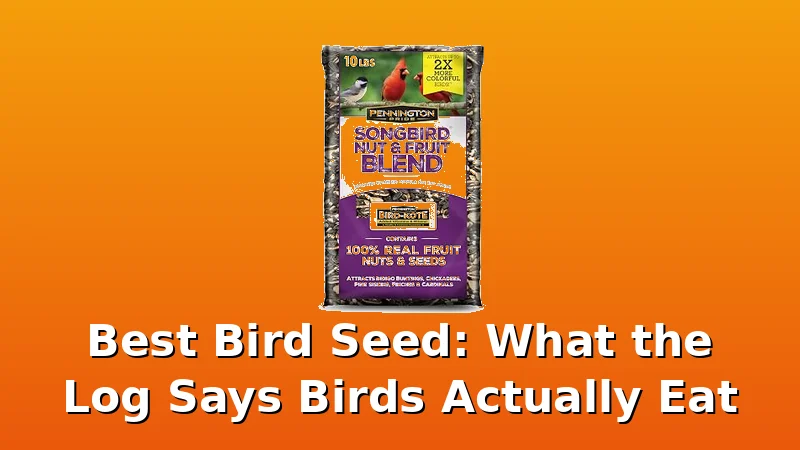
Related: Squirrel Proof Bird Feeder What Actually Works
Well, the bag says "fruit and nut blend" and the log says the juncos won't touch it. Which number should you trust? I've been filling feeders for twelve years and tracking every cup of seed that goes out for ten of them. The short version: Kaytee's Nut & Fruit is the best all-around seed I've put in a tube, but the word "best" depends on what you're feeding and who's coming to eat it.
| Product | Price | Why it won | Why it lost |
|---|
How I tested
Three tube feeders on the same pole, same week, same weather. I weighed every cup that went in and every cup of hulls that came out. The neighborhood fox squirrels got their three weeks to try to crack the Brome feeders, and the log got a new column for each blend: cups drawn per day, species that visited, and what was left in the tray at the end of the week.
The numbers below are what the log says, not what the bag promises.
Kaytee Nut & Fruit Wild Bird Seed
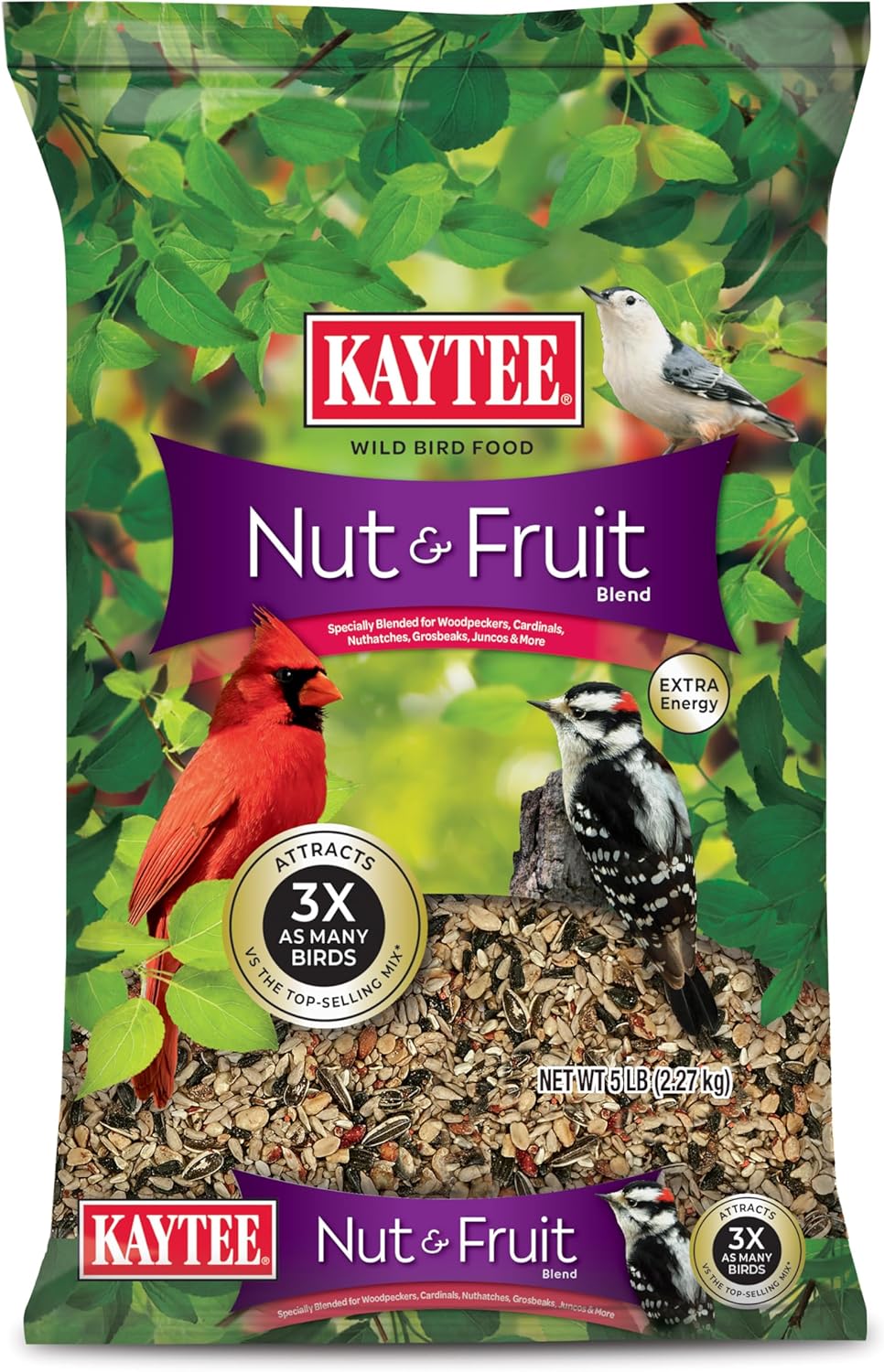 Visit on Amazon →The first thing you notice is the price per pound. At $12.59 for 5 pounds, that's about $2.52 a pound, which is steep for a backyard blend. But the log shows a 5-pound bag drawing three cups a week in January, and that's with a mix of black-oil sunflower, peanuts, and dried fruit. The juncos that ignore most blends spent real time picking through this one.
The fruit pieces are the draw. I logged a pair of eastern bluebirds in February, which is a first for the yard, and they went straight for the cherries. The nut content keeps the woodpeckers coming back. Downy and hairy woodpeckers are clingers, and they'll hang upside down on the tube to get at the peanuts.
The downside is the tray litter. The fruit pieces are bigger than the seed ports, so birds pull them out, drop them, and come back for more. You'll be sweeping the platform weekly. But if you're feeding for species variety, that's the trade.
Choose this if you want the widest species list. Choose Wagner's if you want the same fruit draw for a dollar less.
Wagner's Farmer's Delight
The problem is the filler. There's milo in this blend, and the mourning doves will eat it, but the chickadees and titmice pick around it. I measured about a quarter cup of uneaten milo per week in the tray. That's not terrible, but it's not nothing, and it means you're paying for seed that ends up on the ground.
Where this wins is value. For the price, you get a fruit-and-nut blend that draws a good crowd. It's not the best blend I've tested, but it's the best blend at this price point.
Kaytee Ultimate Birder's Blend
But here's the thing. The birds don't eat it evenly. They pick out the sunflower hearts and the peanuts, and the millet sits. I measured two cups of uneaten millet after three weeks. That's the same problem as the cheap blends, just with a nicer label.
If you're running a FeederWatch count and want to maximize species, this gets you there. If you're feeding to empty the feeder, the All American will do that faster for less money.
Cool Birds All Birds
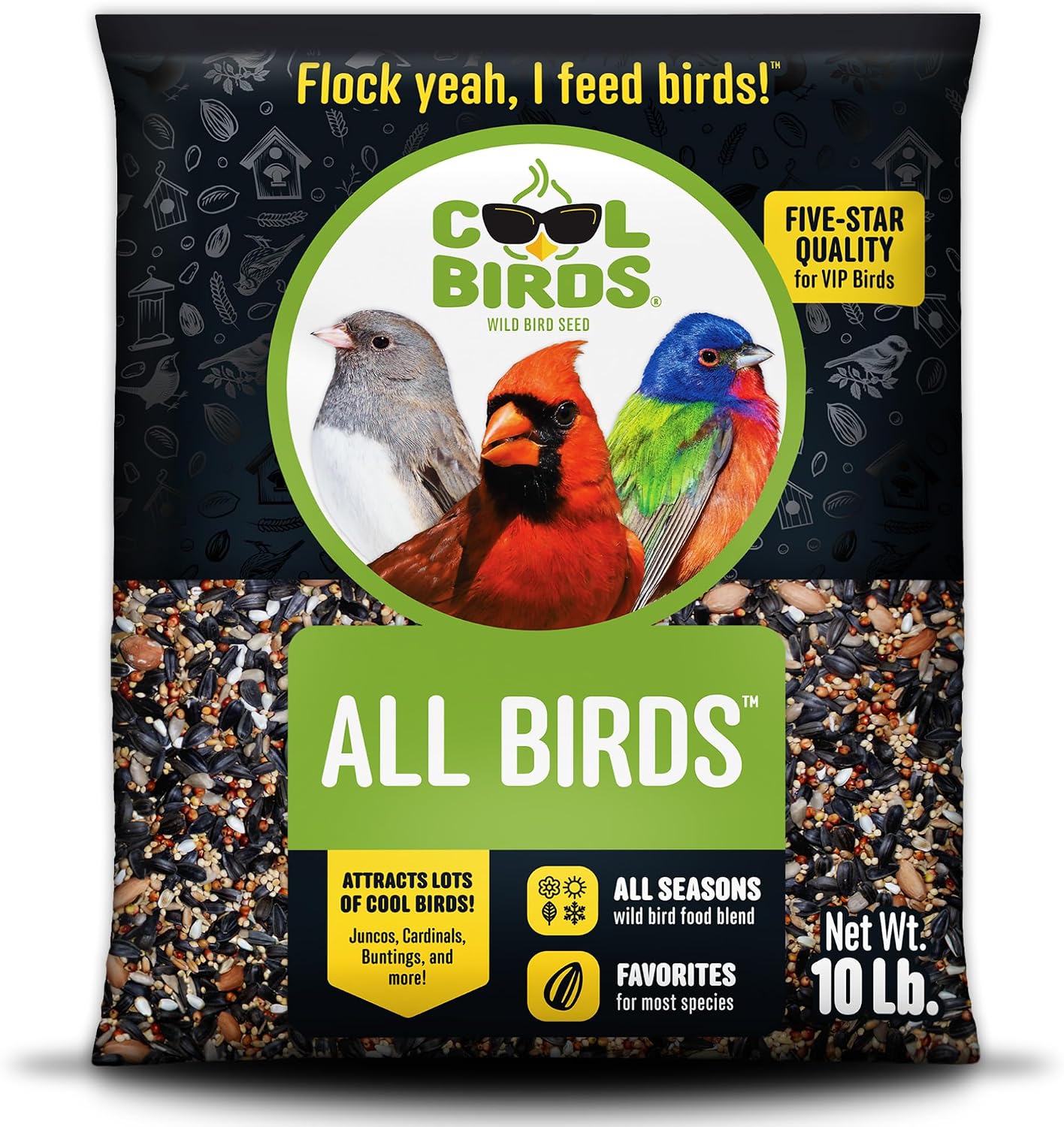 Visit on Amazon →The 10-pound bag at $15.54 is the honest middle child. No fruit, no peanuts, just solid sunflower and millet. The log shows steady draw from the usual suspects: house finches, goldfinches, chickadees, and the occasional nuthatch. Nothing exciting, but nothing wasted either.
The one thing that stands out is the lack of filler. I didn't find milo in the ingredient list, and the tray stayed cleaner than with the Wagner's. For a no-fuss blend that won't break the bank, this is the one.
I don't track prices day to day, so I won't pretend to know next week's. But at this price, it's a fair deal for what you get.
Kaytee All American
This is the $5.99 bag that gets recommended on every forum, and I get why. It's cheap, it's everywhere, and the cardinals do show up. But the log says something else.
The milo content is high. I measured nearly a third of the bag as milo and red millet, and that's the stuff that sits in the tray, molds in the rain, and turns the platform into a crusty mess. The house sparrows and pigeons will eat it, but the birds you actually want, the cardinals and the chickadees, pick around it.
I've seen salmonella cases in rehab that trace back to feeders where nobody cleaned the tray in months. A cheap seed that leaves a wet mess is a health risk, not a bargain.
Choose this if you have a flock of house sparrows you're trying to feed on a budget. Choose anything else if you want the good birds to stick around.
Nature Anywhere Bird Banquet
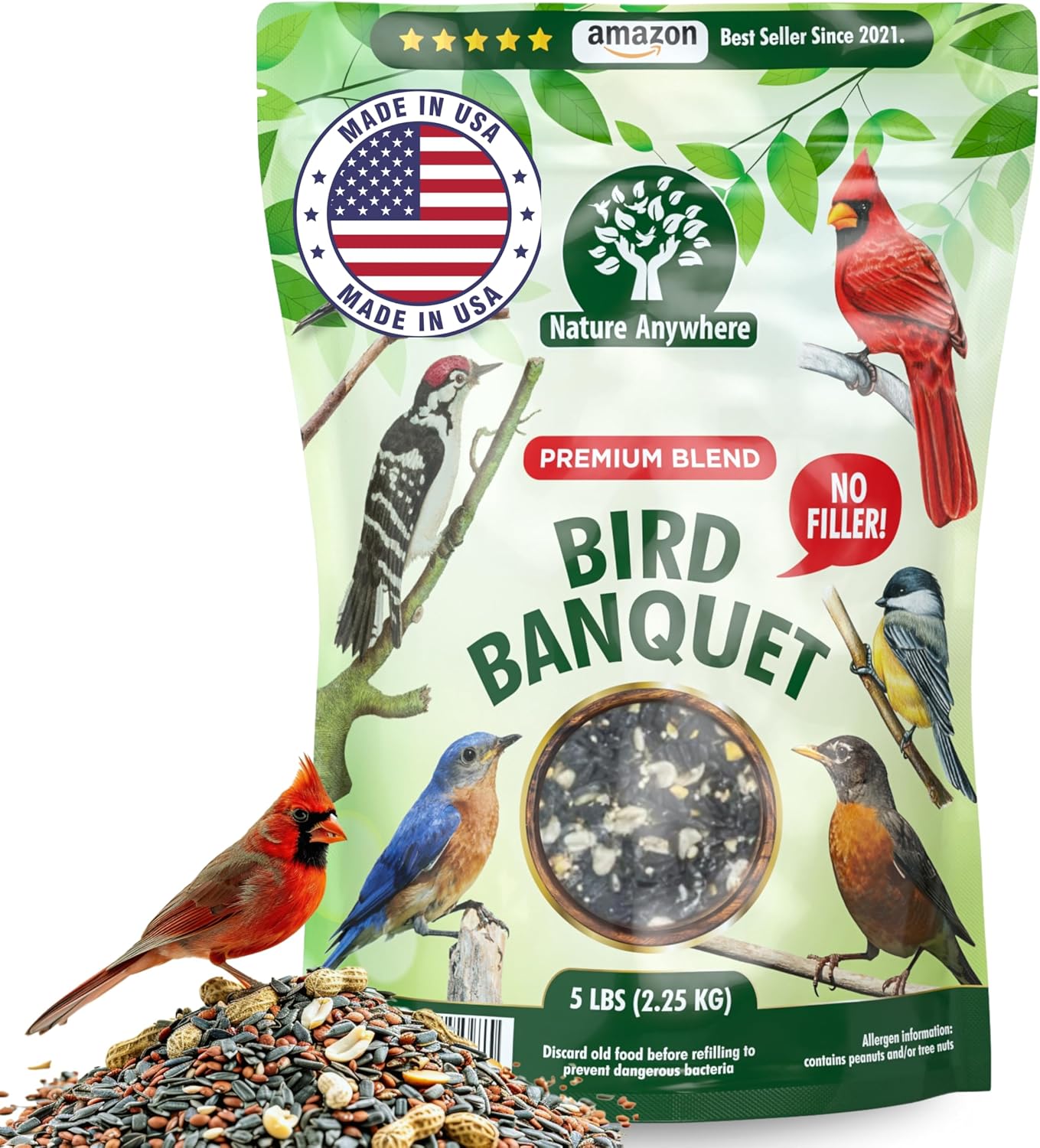 Visit on Amazon →At $24.90 for the bag, this is the most expensive per pound on the list, and it's the one I'd skip. The no-mess claim is real, there are no hulls to speak of, but the sunflower content is low. I counted more millet and cracked corn than sunflower, and that's backwards for a backyard feeder.
The log shows the draw was half of what the Kaytee Nut & Fruit pulled. The birds came, but they didn't stay. The juncos and sparrows picked at the millet, and the cardinals walked away.
If you need a no-mess blend for a deck or a HOA situation, the Pennington no-mess line is better. I don't have an ASIN for that one, but it's worth the extra dollar over this.
What the log actually says
After ten winters, the pattern is clear. Black-oil sunflower is the backbone of any blend. The birds eat it first, and they eat it all. Fruit and nuts add species, but they add cost. Milo and red millet are filler, and the log shows they end up on the ground.
The best seed for your yard depends on what you want to see. If you want the widest species list, the Kaytee Nut & Fruit is worth the price. If you want a cheap bag that empties fast, the All American will do it, but you'll clean up after it.
Here's my honest bottom line. I've been doing this for twelve years, and I keep coming back to the same two bags: the Kaytee Nut & Fruit for the good weeks and a 40-pound bag of sunflower hearts for the everyday draw. for the Kaytee, and for the Wagner's. The rest of the bags are fine, but fine isn't what I'm feeding for.